
The Story Behind The Product

8710cotton_plantWhen considering product choices for corporate branding, the trend is as much about the story behind the product, as the product itself.  Consumers are questioning if they are manufactured in a responsible way, can they be recycled, is it USA made.

From cotton apparel to electronics, whatever brands do to embrace the consumers growing demand for more information on the products they receive, will help build brand loyalty.   It is more important than ever for corporate buyers to consider products that will engage their customers with things to think about and stories that will inspire them.

One of my favorite stories comes from the USA manufacturer of casual cotton clothing, American Apparel.   Founded in 1989, with manufacturing based in Los Angeles, it is one of the few clothing companies exporting USA made goods.  To its credit, it promotes labor policies that excludes use of clothing manufactured in sweatshops, and with the current worldwide attention on the horrors of the Bangladesh clothing factories, this story is one that will resound with every person who receives that branded t-shirt.

Another example of a product supplier with a story worth telling is Gary Line, a manufacturer of plastic molded products such as bike bottles, stadium cups and ice scrapers.  Since the 1960’s, long before recycled products became such an industry trend, they used trimmings and rejects from their molding department to produce recycled products.  Today, using both their own waste and other post-consumer recycled plastics in their USA manufacturing process, Gary Line can offer products that support a cleaner environment and a facility that fosters the call for more USA made merchandise.

These stories, and all the subtle facts behind the other branded products that are distributed to increase brand awareness, could be just the thing that differentiates your t-shirt or bike bottle from the dozens of other logo products every consumer receives.  Your ability to get people thinking about more than just the giveaway, will also make your brand more interesting.  Next time you’re in the market for promotional merchandise, ask about the story behind the product!

Host A Live Event And Keep The Conversation Going

Live_Event_Laser_3Engaging corporate customers at a creative vendor fair, or inspiring employees after a motivating off-site sales seminar, is an ongoing work-in-progress, rather than a one-time effort.   The lasting personal connection that comes from hosting a live event should be enhanced by continuing the conversation started at the event through social media.  After all, social networks are our best platforms for communication and should be part of every company’s marketing strategy.

Live events are hosted for a variety of reasons, including increasing brand awareness, building customer loyalty, improving employee morale, and capturing media attention.  Integrating social media into business conferences and events will help support those goals and improve the long term ROI.   A few of the things to consider when planning for the next event are listed below:

  • Start with an agenda:  establish a clear schedule for presentations, breakout sessions, Q&A and networking
  • Consider timing for communication:  don’t just focus on how to advertise prior to the event date – determine what follow-up communication tools will play a part after the event
  • Communication should come from all forms of media:  tools like email, mailings, webinars, flyers, Facebook and Twitter should all be part of the strategy
  • Understand your audience:  determine what your customers or employees are hoping to gain from the event, and build your strategy around meeting those expectations
  • Embrace the unfamiliar:  if you aren’t comfortable tweeting live during an event, or you don’t have many Facebook followers, prepare early with social media training sessions and employ others who can help get the word out
  • Share your best stuff:  go beyond the written script and share the best things that are happening in the moment to help build excitement around the event
  • Consider all senses:  when deciding on what communication vehicles will carry your content, Twitter tweets, YouTube videos, Pinterest images and Facebook posts will work together to reach a broader audience

The above suggestions represent only a few of the many considerations the event planning team must tackle before, during and after a live event.  So the best suggestion of all remains – START EARLY!

Oh yes, and don’t forget to have fun while keeping that conversation going!

Non-Cash Incentives Drive Top Sales Performers

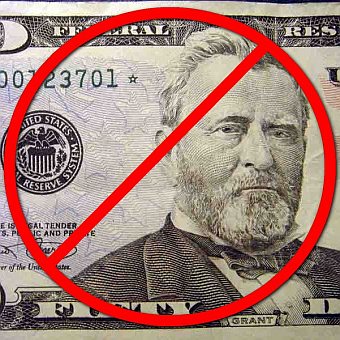
NO-50-dollar-bill-340pxIn February, 2013, research from the Aberdeen Group, a Boston based research firm, shows top-performing companies are more likely to motivate their sales teams with non-cash rewards and incentives.   That information supports data in an April, 2012 article in Incentive Magazine that states best-in-class firms were more than twice as likely (21% vs. 10%) to use non-cash incentives as industry average or laggard firms.  The Aberdeen research goes on to show that firms with formal internal sales emplyee recognition programs had 14.8% higher team quota attainment and a 5.9% higher customer renewal rate.

So what types of non-cash rewards are most likely to motivate a company’s sales force?  As is the case with every corporate merchandise purchase aimed at employees or customers, the answer depends on the audience.  A target audience consisting mostly of women prefer home, health and jewelry selections.  A male based demographic is motivated by lifestyle products like backyard grills, technology items and recreational equipment.  Group travel appeals to all participants, and verbal praise, public recognition and peer-to-peer recognition remain important ingredients to a successful incentive program.

Professional incentive management professionals can offer a variety of tools to build a custom program aimed at the sales associates of any company, large or small.  And since the most important members of that sales team are the top performers, it may be time to call your incentive program professional and investigate more compelling non-cash rewards for better sales results at the end of the year.

Customer Service That Is Good, But Not Great, Is Not Good Enough

customer-service1In our world of exploding social media channels and on-line ratings sites, customer word of mouth can be a far-reaching evaluation of the products and services of any company.  In consideration of that fact, attention to an outstanding customer service experience should hold equal importance to the quality of the products being sold.  And I believe that level of service starts at the beginning of the sales process.

While most companies like to advertise “amazing” customer service and “flawless” attention to detail when presenting their products and services, the reality is many times closer to “average” service and “questionable” attention to detail.  To be fair, it’s not always easy to be responsive, patient and attentive when working with customers who may have unrealistic expectations.  But managing those expectations from the start is the responsibility of the account manager, not the customer service associate whose job it is to ensure customer satisfaction AFTER the sale.

In the world of selling promotional merchandise, outstanding customer service has become one of the most important things that sets us apart from countless other competitors.  The work of establishing a solid basis for total customer satisfaction begins when a product is first presented to the client for consideration.  The following checklist represents some of the most basic things to consider before processing an order for branded merchandise:

  • Establish type of event; client demographic; budget
  • Discuss and record all client preferences for decoration method (logo size, placement, color)
  • Present all options for special packaging or custom inserts (samples should always be shown to client for approval)
  • Confirm timing for in-hands delivery date; carton labeling; ship method; freight cost
  • Present and secure signed approval of art proofs for EVERY order
  • Keep client informed of all steps in the order process until the order is delivered (when to expect art proof; when does production begin; when will order ship; when will order be delivered)
  • Follow up with customer after delivery to get feedback

If a corporate customer comes to expect this type of service from their promotional products partner from the beginning of the sales process, those competitors who don’t offer that same level of personal attention may eventually be replaced.  It’s not enough to be good – we should all be striving for customer service greatness!

Send me your stories of exceptional customer service and I will share them with my audience.  Let that positive word of mouth begin here!

(Image via business2community.com)

Increase Your Socially Responsible Footprint

corp soc respAccording to BusinessDictionary.com corporate social responsibililty (CSR) is “A company’s sense of responsibility towards the community and environment (both ecological and social) in which it operates.”  This concept has been around since the late 1960’s, and since that time corporations increasingly realize the value of the improved brand reputation that comes from a commitment to CSR.

CSR initiatives are a powerful branding tool when executed in a way that demonstrates a true commitment, rather than just a PR gesture.  Printing on both sides of the copy paper and recycling pop cans isn’t enough to establish a company as socially responsible.  Using sustainable materials in manufactured products;  reducing energy consumption in operations; and donating employee time to community projects are all practical ways to increase the corporate socially responsible footprint.  Oh – and let’s not forget another important action that can demonstrate our pledge to social responsibility – buying and distributing promotional products that are eco-consious, and, in some cases, sourced from fair trade, fair wage suppliers.

Examples of socially responsible products range from gourmet food produced in Yonkers, NY by a bakery committed to fair wages and community renewal, to tote bags made in Cambodia from recycled mosquito netting.  Jewelry is created from tagua seeds that are harvested from the sustainably-harvested Ivory Nut Palm grown in the rainforests of Columbia.  And something as simple as an organic cotton coffee cup sleeve ($3.00 for an opening order minimum quantity of 100 pieces) supports Kenyan mothers of children with special needs.  The prices vary as widely as the products, so there is a product and a pricepoint to fit most corporate marketing needs.

Most of us understand that not everything purchased to promote brand awareness can be eco-friendly.  Sometimes the pricing can’t meet the budget guidelines, and other times the product options don’t offer choices that speak to the target audience.  But with all else being equal, companies that actively promote their corporate social responsibility programs by putting their brand on products that speak to their commitment to society and the planet, are viewed more favorably.

Earth Day is April 22 – now is a good time to give visible testament to how your company plans to increase your socially responsible footprint!

(Image courtesy of Tawheed Manzoor)

Uniqueness Is In The Eye Of The Beholder

uniqueWhen a customer says they want a unique promotional product to represent their brand, what they are saying is that they want an item that provides a positive emotional response in their audience.  Maybe something new to the market, but more likely something their particular audience is not accustomed to receiving.

For instance, I imagine that there have been many highway safety kits, road atlases and tire gauges given away by car dealerships over the years.   But how many times has a car dealership given a branded mobile phone holder or dual USB car charger?  And, hopefully, the car owner would use the phone holder or car charger far more than a roadside safety kit, giving the car dealership the advertising value they are paying for by providing more “impressions” every time the driver gets in the car.  Those items are not new, unique products, but they would likely be new to that audience, and therefore elicit a more positive response.

As a promotional products provider I have sometimes fallen into the trap of omitting product ideas in customer presentations that represent items I have sold many times in the past.  I leave out options that I perceive to be “stale” or “overdone”, but just when I think I have put together a wonderful assortment of unique, creative ideas, my customer will ask for samples of the same item I consciously left out of the mix.  Why?  Because that customer has never used that particular item in a campaign and it represents a fresh idea in their market. (Note:  when this happens, it’s not a proud moment for me)

Logo merchandise uniqueness can mean different things – a totally new product; a classic product with a new twist; or a product staple that is used in a new way aimed at a different audience.  As it turns out, most of the time, the uniqueness truly is in the eye of the beholder.  So consider what has been done in the past to excite your audience, and take another look at ideas that are “new to you”!

No-Stock Fulfillment Programs

A164-00097Promotional product fulfillment programs that can offer a variety of branded products with no stock exposure may not be the conventional model for company stores, but it is a concept whose time has come.

As corporate procurement departments are continually working to drive the costs out of these programs, their vendor partners have an obligation to explore different ways to make that happen.  There are many ways to achieve cost savings  – operational process improvements; creative product sourcing; aggressive price negotiation; and attention to freight costs are a few.  However, the way to offer the most relief from that dreaded end-of-year obsolete inventory exposure is to design a program that reduces, or eliminates, logo product stock.

Distributors can forge partnerships directly with product suppliers, process orders through a custom web site designed to integrate with those suppliers, and ship directly from the supplier warehouses.  Or, there are 3rd party vendors that offer that same service, along with impressive web platforms, to fill the void for distributors that want to focus more on client service than web site management.  In either case, since the product is stored, decorated and shipped on demand from the manufacturer, the corporate customer has no inventory exposure and the distributor has no need to consider financing, storing and shipping the product from their own warehouse as part of the end product price.

Of course, the program dynamics will change a bit with this model.  Lead times will increase – same-day or next-day shipping will not be possible without pre-decorated merchandise.  The price to produce one piece of embroidered apparel will not be the same as the cost of running 12 pieces.  Hard goods (pens, cups, bags) will have minimum order quantities.  (Although, the truth is, the price of shipping one coffee mug is very costly and is a practice that should be eliminated from corporate purchasing habits anyway.)

Corporate customers want a logo store program solution that will offer cost savings, quality products and a service level that provides the internal buyers with a positive user experience.  No-stock fulfillment programs is a concept that can provide that solution when executed correctly, with the expectations addressed and communicated thoroughly with all stakeholders.  Discuss the possibilities with your promotional product provider – it may be time for a change!

The Book Of Flies Helps Reel In Clients

od013_book_of_fliesAccording to the American Sportfishing Association, with more than 46 million anglers, more than twice the number of people fished in 2011 than attended every NFL game combined.  To put the financial impact of those numbers in perspective, if fishing were a company, the amount spent by anglers to support fishing related retail sales would rank 51 on the Fortune 500 list.  With that information in mind, it may be time to consider corporate gift options that appeal to the millions of fishing enthusiasts in this country.

The list of fishing related promotional merchandise options is long, and there are items that will appeal to every recipient and every budget.  For example:

  • Handmade leather Book of Flies is a styish way to store and organize fishing flies
  • Hook & Tackle microfiber Fishing Shirt with UPF 35+ sun protection, rod holder and utility loop
  • Waterproof pouch to protect fishing license
  • Eagle Claw collapsible open cast Rod & Reel
  • Bobbers to keep the line afloat
  • Fishing Clipper with knife and line pick includes 36″ neck lanyard
  • Rapala Fishing Lure in 3 different sizes to attract different types of fish

With figures that prove more Americans fish than play golf and tennis combined, this is a demographic that deserves your attention.  Freshwater or saltwater – lakes, oceans or streams – the avid angler will find the time and the place to enjoy this sport.  Give him or her a reason to connect your brand with such an enjoyable part of their lives!

Earth Day Is April 22 – Show Your Commitment

  • eco bagCommitting to a business strategy that supports a cleaner environment is not so much an option, as a business imperative, according to Corporate EcoForm Chair P.J. Simmons.  Some firms have invested in building practices that win them LEED (Leadership in Energy and Enviornmental Design) certification, while others have enlisted sustainability practices that affect every operational business process from information technology to product design, and even into areas like accounting and marketing.
  • To build on current practices, or even to begin moving in that direction, there are thousands of eco consious products available for logo branding that will demonstrate not only your awareness, but your corporate commitment to the environment.  And Earth Day is a perfect time to roll out that message of eco-awareness to your customers with a product that is useful, attractive and appropriately planet-friendly.  Consider some of these options:

Under $20.00

  • Cotton tote made from 100% recycled material
  • Umbrella made from 51% recycled material
  • Polos and t-shirts made from organic and recycled material

Under $10

  • Flash drive made from bamboo or recycled paper
  • Car charging flashlight
  • Messenger bag or duffel made from 100% recycled material

Under $5.00

  • Plastic bag recycler made from 100% cotton
  • Insulated grocery tote made from recycled non-woven material
  • Journal made from 100% recycled paper

Under $1.00

  • Eco pen made from recycled paper, bamboo or biodegradable plastic
  • Koozie beverage holder made from recycled foam
  • Magnet made from 100% recycled material

There’s a growing demand for recycled products, intensified regulations and even increased investor pressures to demonstrate sustainable practices.  Build your brand identity, and support a cause that makes business sense, with products that represent today’s reality of the need to reuse, recycle and reduce.