What’s So Bad About Cost-Plus Pricing?

Cost-plus pricing is used primarily because it is easy to calculate and requires little information.  Basically, this pricing method is accomplished by adding a standard mark up to a product after production and distribution costs have been met.  While it seems to ignore demand, image and the value of customer service, I would argue that if a provider truly doesn’t consider those other market factors, the business has problems that a cost structure can’t fix.

The true challenge to determining the fairest pricing structure for both the customer and the vendor is to develop a clear understanding of how to categorize costs.  Overhead costs, production costs, and YES! the costs associated with exceptional customer service and fast turn-around should all be considered when working to negotiate an optimal cost-plus pricing structure.  Too often the customer views only the product cost as the base line number for the negotiation on profit margin, without considering the cost of the infrastructure needed to satisfy the often-demanding customer service needs of the end users.  On the other side of the table, vendors prefer to lean towards value-based pricing which puts more weight on perception of product and service value rather than the actual costs associated with delivering orders on time and under budget.  After all, placing a dollar value on exceptional service is tricky business indeed.

However, only when a mutual understanding and final agreement is reached on the baseline cost of delivering that final product can a fair profit margin be negotiated.  This margin can be applied to all purchases, and the procurement team can feel confident that less-experienced buyers within the organization will enjoy the benefits of a well-designed pricing program. Once this happens, the buyer/vendor partnership can grow and thrive on a model that is based on transparency and mutual gain.

Note to buyers:  cost-plus pricing is a good thing only with a full understanding of the vendor costs to deliver the product and service your audience deserves, and your budget demands

Note to vendors:  cost-plus pricing is only scary if you haven’t been able to quantify the true costs of delivering quality product in a timely manner, with a customer service approach that exceeds customer expectations

Cost-plus pricing is not as simple as it may seem, but it’s worth the effort to figure it out!

Shopping Over Stocking

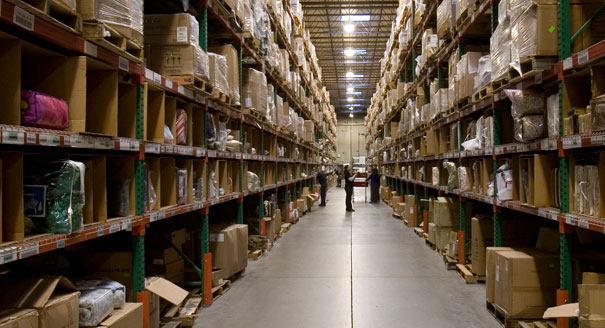
On-line company stores featuring corporate branded merchandise don’t have to be limited to a stocking program solution.   For many corporate partners, a web store with virtual images of pre-selected logo products that are not stocked on a warehouse shelf is a better answer for managing the purchase and distribution of promotional merchandise.

When does it makes sense to forego the inventory investment and build a non-stocking program that offers the buyer the opportunity to shop multiple product choices, but includes production lead times?  Every corporate customer has different needs, but below are a few tips to help guide the discussion.

When the buying habits point to:

  • Corporate purchasing structure that allows for regional discretion on product choices
  • Large quantity purchases a few times a year rather than smaller purchases on a regular basis
  • Buyer needs that drive constantly changing product selections, instead of repeated investment in the same pen, mug or writing journal
  • Apparel purchases that require some type of customization (department name, employee name, etc)
  • Seasonal purchasing habits
  • Fewer than five promotional product purchases per week

When considering this option, it’s also  important to note that non-stocking programs don’t offer the same convenience as fulfillment programs.  Production lead times that, even with the most innovative and responsive vendors, cannot meet a same-day, or next day, delivery deadine.  Also, product manufacturers require a minimum quantity purchase for branded merchandise, which may be higher than the buyer needs for a particular event.  However, for many companies the possible drawbacks are less important than the advantage of offering a program that can feature more creative product choices and doesn’t carry the risk of inventory obsolescence.

In the final analysis, many companies don’t fall squarely into a single category.  With the help of an experienced vendor partner, a well-designed corporate promotional products program can incorporate both stock and non-stock merchandise selections to ensure the buyer needs are met, while protecting the budget requirements.

Stock Or Shop?

One of the most important questions with new and existing customers is the decision of when to implement (or eliminate) a promotional products stocking program.  Over the next few weeks, I will explore the question of when it makes sense to stock pre-decorated items in a supplier warehouse for on-demand shipping, and when it’s better to shop, and purchase, these products as they are needed.

Promotional products fulfillment programs are designed to increase customer service and reduce product demand uncertainty. And, while it’s tempting to consider the annual corporate spend on branded merchandise as an easy guide to answer this question, I would argue that even when that figure points to a stock and ship solution, careful analysis of the following considerations will often change the size and scope of that program.  A few of the key indicators for consideration of a stocking program:

  • Different corporate buyers repeatedly purchase the same type of promotional product for marketing events
  • Quantity of product needed is often below the standard vendor minimums for on-demand production, resulting in over-buying, over-budget
  • Decentralized purchasing structure that opens the door for duplication of vendor service charges and employee time squandered on tasks not associated with their assigned duties
  • Employee uniform program requires implementation expertise
  • Logo standards are being neglected

Both the customer and the vendor have important reasons to build a multi-dimensional program model that successfully services the end users.  There are many on-line tools and logistics solutions that can be combined to meet the unique needs of the individual corporate customer, such as tiered pricing structures, multi-location budget management, and creative distribution options.

When the above criteria for analyzing the value of a stocking program applies, it follows that a professionally managed fulfillment program makes sense.  But what about the corporate customer who uses branded merchandise as part of their overall marketing strategy, but doesn’t fit this model?   I’ll explore the various reasons to shop vs stock in next Monday’s blog!

Corporate Eye Candy

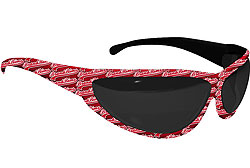
Summer sun brings ample opportunity for marketing your brand with fun flair!  Beach towels, coolers, sandals and, for those companies looking for an “in (or more appropriately, on) your face” promotional item … high quality, lightweight sunglasses.

With complete coverage of your logo, advertising designs or photo images across the entire frame, custom designed sunglasses provide a unique way to bring attention to your brand.  Not to be confused with the age-old, low quality promotional glasses that even the youngest of your customer base found unappealing, today’s choices offer UV protection, stylish frame choices and scratch-resistant lenses.

With style options that appeal to both genders and all ages, custom eyewear that protects the eyes while creatively showcasing the corporate brand is an ideal promotional product choice for sporting events, company picnics or wellness initiatives.  Bundle the glasses with a branded eyewear retainer and bottle of sunscreen, and you’ll have a summer promotional package that will shine!

(image via BrandRims)

What Gets Measured Gets Done

Attributed to the management guru Peter Drucker, the maxim “What gets measured gets done” is more than a saying … it’s a basic business truth.  Fortunately, for companies that invest in loyalty or incentive programs, they are among the most measurable forms of business expenditure.

Managers should begin the process of building an incentive program by asking, and aswering, some basic questions:

  1. What program metrics are in place now? (they should be specific, measurable and relevant to your audience)
  2. What is the value proposition for the customer? for the organization? (work for a balance between your company and your target audience)
  3. How do we track the program’s costs? (can be as simple as an Excel spreadsheet, or a more sophisticated data analysis process, depending on the nature of the program)
  4. What reporting tools will be used to measure the program’s performance?  (increasingly captured through web-based programs, be sure the process is documented and all stakeholders are trained)
  5. How will we measure the incremental return from the program?  (returns can be measured in tangible gains, like increased revenue … or intangible progress, such as improved employee morale)

The due diligence required to answer these 5 questions before a program launches is not the “fun” part, and short cuts are tempting. However, if you’re a believer in the adage “what gets measured gets done”, the up-front investment of time will pay dividends of a more profitable and effective program

Under The Corporate Umbrella

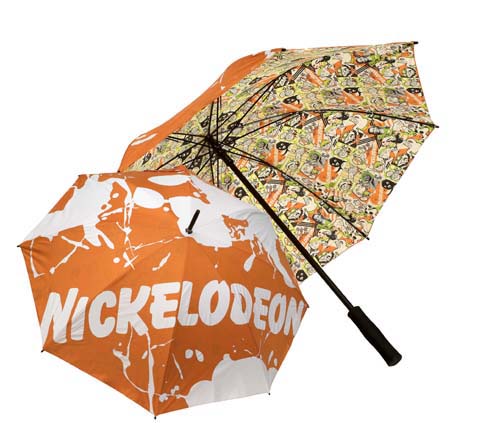
There are few products better than a custom designed umbrella that offer such a high profile billboard for your corporate brand.  Everyone needs one (or in most cases, two or three), but few corporations consider the opportunity this simple accessory offers for all-over customization that transforms a basic umbrella into a work of advertising art.

When you consider how many places the recipient will use this gift – running to the office on the busy streets; sitting at sports activities; walking around the neighborhood; or standing at the bus stop – it becomes clear how many other potential customers will be nearby to view and appreciate the marketing message.  Customization options range from all-over print designs on the fabric panels (inside and out) to carved handles and color matched frames.  And if the design is applied to a well-built umbrella with wind-resistant construction, the customer will be able to weather the storms for years, rather than send it to a landfill after the first gust of downtown wind turns it inside out!

As with all fully customized products, a winning design takes an open mind, production expertise and TIME (this isn’t something that can be delivered in time for next month’s new product launch).  But with the right vendor partner and creative graphics, a basic everyday item invented over 4,000 years ago can become a corporate canopy that makes a bold statement!

(image via AAA Umbrella)

Texting While Driving Kills

Corporations interested in sponsoring an advocacy compaign that everyone can relate to should consider that raising awareness about the dangers of texting while driving is a social cause worth shouting about!  Teens and adults alike are guilty of contributing to this epidemic.  And similar to the dangers of drinking (or eating or shaving or hairstyling) while driving, texting can kill!

One way to get the word out is with this debossed Silicone Thumb Band that carries the message “Texting Kills” or “Text Free Driver”.  Available in different sizes and colors, this band can be worn by people before they get into a car to remind them of the dangers of texting while driving.  Schools, financial institutions, healthcare organizations, insurance carriers and non-profit agencies are among the many types of institutions with a customer base that could benefit from this message.

For the cost of a refrigerator magnet you can distribute an item that will speak to your company’s commitment to promoting safe driving habits, which can enhance the other parts of your marketing strategy and encourage loyalty and support for your firm.  Win, Win … results worth investing in!

(image via BamBams)

You CAN Judge A Book By Its Cover

Creative packaging can set your company and your brand apart from all the other marketing clutter competing for the attention of your customers.  Like savvy advertising campaigns, inventive packaging for your promotional product will capture the attention of the recipient.

One clever way to present a direct mail piece is this double-door book style mailer that is digitally printed on the entire sleeve and shrink wrapped for worry-free shipping.  Pens, flash drives, and flashlights are a few of the items that can be inserted into this packaging, and with the generous space available for printing, presenting your information in an original way is limited only by your imagination.

As pointed out in a March, 2012  Forbes  article on the value of direct mail marketing, “physical media” – AKA direct mail – leaves a ‘deeper footprint’ in the brain …” than those media vehicles of the digital variety.  And in today’s competitve world where first impressions are often the ones that count the most, when allocating marketing budget dollars, innovative packaging options should be an essential part of the total investment.  In this case, judging a book by its cover is a good thing!

(Image via Bentcil)

Good For The Corporate Soul

Rewarding and motivating employees should be an ongoing, ever-evolving priority for all corporations, regardless of the number of associates or size of the budget.  If we assume that most enlightened management teams understand this important fact of corporate life, then the only question left to ponder is what types of incentives are just as satisfying to give as they are to receive.

For many in today’s new workplace reality of working longer hours with less support staff and higher stress, the gift of wellness is a perfect solution. When taking care of business also means taking care of employees’ health, the opportunity to select a relaxation massage, facial or sauna from the local spa facility represents a progressive view of how to build an incentive program for today’s workforce.  These programs can be as simple as enlisting the services of a professional massage organization that will come on-site and provide chair massages for ten to twenty minutes.  Highly focused therapeutic neck and shoulder therapy during an employee’s break will reduce aches and pains, which can only help increase morale and productivity.

But whether a relaxation package is part of a more sophisticated reward program, or just a one-time gesture of appreciation, it’s proven that when employees thrive, businesses thrive.  So it makes perfect sense that what’s good for the corporate soul is also good for business!

Green Is The New Everything

Curious about what to look for when your company wants to integrate sustainable and strategic environmentally friendly products in your next marketing campaign?  You’re not alone!   When working towards promoting green awareness, while still striving for outstanding results from the promotion, it’s often difficult to sort through the often confusing world of “green” merchandise.  As a way to help with that effort, I’ve provided a few tips for sourcing those eco-responsible products.

  1. Biodegradable corn plastic:  Used for everything from pens to mugs.
  2. Solar-powered technology:  Provides energy for earth-friendly flashlights, calculators and more.
  3. Organic cotton, bamboo or hemp:   Makes apparel, tote bags and other products “green.”
  4. Recycled PET:   Transforms traditional polyester and plastics into environmentally correct choices for products like coolers, duffels and backpacks.
  5. Naturally appealing products like plant seedlings, seed packets and even imprinted walnuts provide a clever alternative to man-made promotional items.

With the thousands of earth-friendly product choices available today, successful marketing campaigns can also promote eco-action and green awareness.  If your return on investment is positive and your brand is associated with making a positive difference for our planet, where’s the downside?    With everything to gain, and nothing to lose, green really is the new everything!