Time For Action In The Second Half

Time for action. Stopwatch on white background. Isolated 3D image“How you respond to the challenge in the second half will determine what you become after the game, whether you are a winner or a loser.”  Lou Holtz 
Second quarter results are in – it’s time to look at the data and analyze how you make the most of the remainder of the year.  Whether the results met expectations, or fell short of the goals you started the year with, the second half of the year is the perfect time to “re-boot” your corporate energy and reenergize your brand visibility.
However, expanding your brand differentiation as your customers are heading into the third and fourth quarter frenzy can be challenging.   Employees are returning from summer vacations and already looking forward to the fall and winter holiday breaks; sales teams are reviewing their quotas and working harder to meet their goals; the finance department is concentrating on reducing spending and improving profits; and, through all of this, your objective is to somehow break through the noise in order for your brand message to be heard.  To help with that task, consider the following tips.
  • Donate time to community non-profit events:  As Aristotle said, we are what we do.  Volunteering in the community will set your company apart and position you in a different light.
  • Actively solicit customer feedback:  Knowing how your company has scored with customers in the first half of the year will help you map out a strategy for building on the positive and improving on the negative.
  • Optimize your social media channels:  Facebook, Twitter, Google+, Pinterest, YouTube, Instagram – these platforms all have their advantages, but if you don’t have the company resources to stay current on all of them, it’s best to narrow them down.  Expanding your brand presence on two or three social media channels is better than being nearly invisible on all of them.
  • Plan now for end-of-year customer appreciation gift – but send it at Thanksgiving:  Better to beat the end-of-year gift clutter, and express your thanks when it will stand out.  And don’t settle for another cookie tower that will be placed on the pile of holiday food that has already arrived.  Look for the newest, up-to-date promotional merchandise options and demonstrate your understanding that customers aren’t just corporate buyers, they’re people who know a well-considered gift when they see it!

Your company is in the second half and racing towards a great finish – it’s time for action!

Brands Stay Current With Color

radiant orchidAt first site, Radiant Orchid, Pantone’s 2014 color of the year, may not seem to be the easiest color to incorporate into your corporate branding strategy.  After all, a study of the world’s top 100 brands (determined by brand value) shows the most popular colors among top brands are blue (33 percent), red (29 percent), black or gray scale (28 percent), and yellow or gold (13 percent).  Not a purple hue among them!  But with thoughtful consideration of the various ways to incorporate the color trends into your marketing game plan, you can stay current without sacrificing the consistency of your branding message.

Refresh web site images:  Although a corporate web site is the best place to showcase the corporate colors, it should also be the place that is consistently updated with news clips, calendars, videos and photos.  The new color of the year may be reflected in subtle images like a tree with purple flowers; or in an on-line ad for a new customer contest using a splashy new background or text color.

Customize online display advertising:  Online display advertising is different from your website or landing page. Display ads will be competing with many other elements on the page that are out of your control.  Test new colors in photography, illustrations and font to help your ad stand out.

Incorporate new colors into promotional product mix:  News flash! Promotional product giveaways don’t always have to be the same color as the corporate logo.  As long as the logo is imprinted according to brand guidelines, the products themselves should appeal to the audience in a creative way.  Tote bags, flash drives, writing instruments, drinkware, caps and t-shirts could all be offered in a variety of colors – with the same logo design, of course – to demonstrate how your brand is both consistent and up-to-date.

While it’s imperative that a brand maintains color consistency in order to achieve long-term consumer recognition, it is also important to let your customers know that your company is not only aware of popular trends, but is also responding to them.  Staying current is easy with color – give it a try!

(Image via Pantone)


Branding In A Brave New Tech World

techModern technology, driven by perpetual innovation, can boost the visibility of your brand.  Not just for the tech-savvy consumer, even the simplest of products can inspire excitement through smart design and practical application. From smart pedometers for the health conscious consumer of any age, to high capacity power banks that appeal to the techies that never have enough battery life to get through their day, there are tech products that will appeal to every audience. Today’s corporate buyers have as many price point options as style options, so there’s a tech product solution for every marketing budget.   Consider the newest offerings in this trending category of promotional merchandise: $3.00 – $5.00:

  • Slim slider stylus attaches directly to back of phone or tablet
  • 2″ sphere shape silicone speaker
  • Water resistant phone protector

$5.00 – $10.00:

  • Custom shape PVC ear buds
  • Mobile phone charger
  • Neoprene sports armband to hold mobile phone

$10.00 – $15.00:

  • Bluetooth speaker/amplifier
  • Calibration pulse reader pedometer
  • Laser pointer flash drive

$15.00 – $20.00:

  • Remote photo snap for mobile phones
  • Compact aluminum tablet stand
  • Wireless webcam

Branding in a tech-savvy world isn’t difficult, and can be as cost effective as your budget demands.  Next time you need a new idea for a discriminating audience, think tech!

Brands Connect With Experiential Marketing

hugExperiential marketing is a form of advertising that focuses primarily on helping consumers experience a brand.   Staging events with interactive experiences enable your customers and prospects to relate to your brand in a way that creates a memorable, long-lasting impression.  As a result, this type of emotional connection sets your brand apart from competitors, increases brand loyalty and drives sales.

Determining how to bring the event to the people and create a buzz-worthy interactive experience with your audience may seem like the biggest challenge of the planning phase, but in reality it is only the beginning of the discusson.

  • How will you advertise the event?
  • How will the event integrate with the larger marketing initiatives?
  • What social media channels can be used to reach the highest numbers of target consumers?
  • Which branded products should be used before, during and after the event to support the brand message?
  • Which emotion are you trying to associate with?
  • How do you keep the buzz going after the event is over?

The answers to those questions are different for every company, but the discovery phase is not.  Involving your expert corporate partners in the planning sessions is imperative to a creative and memorable event.  Your marketing team may know the demographics for your target audience, but may be less informed in the best content marketing strategy for your social media campaign or have little understanding of the best products available in the promotional merchandise industry to carry your brand message.

Once your planning team has been assembled, the driving mentality behind every suggestion should be how to connect your brand to the senses of the customers.  The booth should stand out; the experience should be creative, but natural (no cream pies in the face, please); and brand ambassadors should exhibit energy and enthusiasm in a professional manner.

Experiential marketing is the fastest growing category of the events sector for a reason.  Do it well and you’ll create brand advocates who will further spread your brand messages through word of mouth advertising, and become a loyal customer for life.


Pack Your Bags!

toteLos Angeles instituted a ban on single-use plastic bags in January and New York City Council recently proposed a bill that would impose a 10-cent fee on all plastic and paper grocery bags.  In addition to the two largest US cities who have taken a stand against disposable plastic bags, several cities throughout America in states like Texas, Colorado, Washington and Hawaii, to name a few, have all imposed bans or nominal bag fees on retail plastic and/or paper bags.  In view of the facts around the disposal of plastic bags – namely, they are not biodegradable; the littered bags are a threat to sea life and animals; and over time they release toxic chemicals into the soil – the number of cities adopting these bans is likely to increase.  So if your company has not yet jumped on the opportunity to attach your brand to a fairly inexpensive item that will likely be used all over town, the time has never been better to consider the many reusable bag options for your next marketing campaign.

It’s not a new concept for companies to distribute reusable tote bags with the company logo to recipients at community events, trade shows, recruiting functions and student career fairs.  Large retail grocery store chains like Whole Foods and Trader Joes sell their branded bags for less than $1.00, and have enjoyed growing brand awareness as those bags are used many times over for lots of reasons besides grocery shopping.  But what marketing teams may not be aware of is the vast number of choices that are now available in this bag category.  The options vary from the simple one-color, non-woven grocery tote that started appearing on the scene in the 1990’s to the laminated, insulated versions with pockets, zippers and different handle lengths.  These bags are designed to be used as lunch bags, grocery totes, soft side coolers, bottle totes, garment bags and backpacks.  They are targeted at parents shopping for groceries, the college kids hanging on campus, and virtually anyone with a need to carry something in a lightweight, yet durable, reusable bag.  Price points vary, but start as low as $1.00 and don’t run much more than about $3.00 or $4.00 for the bag options with all the extra features.

According to Nick Sterling, research director at Natural Capitalism Solutions, “If used once per week, four or five reusable bags will replace 520 plastic bags a year”.  With the growing movement to take positive steps towards helping the environment, why not include branded reusable bags in your marketing strategies and enjoy the benefit of spreading your branding message by turning your customers into a mobile marketing force of useful, sustainable items.

Time Is On Your Side

watch1.2 billion watches are sold annually worldwide.  Watches are a fashion statement for some and a practical timekeeper for others.  They range from the high end classics used for gifts for top employees and important clients, to the nearly disposable styles that are popular with the younger crowd.

Invented at the end of the 19th century, naysayers had predicted the demise of the watch with the explosive growth of clock-equipped cell phones.  However,  in recent years watches have had a resurgence in popularity.  Flashy, bulky watches show up on runways; retro watches are all the rage after the success of shows like Mad Men and Boardwalk Empire; and watch companies like Movado are all coming out with styles that offer bright colors and high tech capabilities.  For many people, a new watch is a fashion necessity.

Considering these trends, corporate marketing departments should consider that a fun, creative watch could be the outside-the-box item that creates a solid brand bond with their customers.  The logo can be big and bold on the face of the watch, or in a more subtle location like the band or the back.  Materials range from stainless steel to plastic, and the color palettes are broad enough to suit any company’s brand color.

The days of waiting to give a watch until your employees retire are long gone.  Today’s watches are a good choice for fundraising events, university promotions, reward programs and recruiting efforts.  Prices range from $5.00 up to several hundred dollars, and are creatively styled to appeal to any demographic.  For your next promotion, what would be better than giving the gift of time!


Generational Marketing

different-heights-01Marketing tactics and media outlets will differ depending on the target audience, so in order to reach those buyers effectively marketers must look at the data to properly design their strategy.  The latest market data for Millennials, Gen Xers, baby boomers and the Silent Generation may surprise you, but the information is a valuable tool for all companies looking for more powerful ways to sell their products and services.

As a guide for this discussion, it may be helpful to know the age definition of the generations marketers are trying to reach.  According to a 2011 Pew Research report, the four target generations can be defined as follows:

  • Millenials:  Born between 1977 and 1992 (age 37 and younger)
  • Gen X:  Born between 1965 and 1976 (age 38 – 49)
  • Baby Boomer:  Born between 1946 and 1964 (age 50 – 68)
  • Silent Generation:  Born between 1928 and 1945 (age 69 – 86)

Millenials:  A UBS survey earlier this year determined that Millenials are still traumatized from the 2008 financial crisis.  Morley Winograd, co-author of Millenial Momentum: How A New Generation Is Remaking America, states “There’s a very clear indication in the market that the effect of the Great Recession on that generation’s psyche is not going away”.  Bottom-line:  Companies need to offer a better bargain, without sacrificing quality or innovation.  Think about giving useful items like a phone charger to catch the attention of this demographic.

GenX:  A 2013 study by the MetLife Mature Market Institute revealed that members of Generation X are especially health-conscious.  Other studies find that they are appreciative of creativity and function – in other words, they love useful things that look cool.   A stylish pen or anything related to technology are good bets for promotional items designed to reach this contingent.

Baby Boomers:  Comprising half of America’s population by 2017, this group is most passionate about the environment.  According to Brent Green & Associates, a consulting firm that specializes in baby boomer-oriented marketing, Earth Day and Whole Foods were founded by older boomers, at the beginning of a eco-conscious movement that started in the ’60’s and ’70’s.  Organic, eco-friendly products are a must for this group.

Silent Generation:  According to the latest US Census data, people 65 and older control 75% of the country’s wealth, along with 70% of its disposable income.  This generation thinks more about the grandchildren than themselves, and are likely to take time to travel to destinations they didn’t have the time or money to visit earlier in their lives.  Travel necessities or a daypack for the grandkids will be appealing to these folks.

When you consider the data, and allow for the differences between the age groups, generational marketing allows you to speak to your audience in their own language.   Try tailoring your marketing message and enjoy the benefits of a more loyal, engaged client base.

Employees Want To Chill Out

ac550_imprintAs summer approaches, companies may be looking for ways to motivate and reward employees right at that critical time when many people enter a mid-year slump.  Maybe it’s the long wait between a short Easter break and the next one over Christmas.  Or, the company may have had a sluggish financial start to the year , and making that up seems like a daunting task after what seems like a short breather from the previous end-of-year push.  Whatever the reason, as managers search for creative motivators, this time of year brings lots of great options.

In an effort to encourage activities that renew energy levels during non-working hours, consider offering incentive gifts that inspire backyard fun, family vacations (at home or away) or just an afternoon at the ball park.  Some good options, suited to fit varying corporate budgets, are listed below.

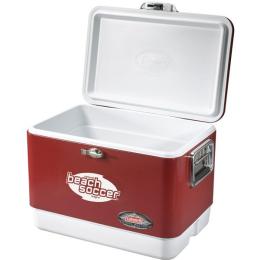
  • Coolers:  From the high end 54 quart steel belted cooler to the humble 6-pack lunch box cooler, nobody has enough.
  • Sport Chairs:  Tripod mini stools, game day event chairs, or folding lounge chairs offer a break from the action.
  • Blankets:  Stadium blankets, travel throws that fold into a pillow for comfort on the plane, and executive picnic blankets keep the outdoors more comfortable.
  • Grilling Tools:  Grill mitts, stainless tool set, and small tailgate grills are essentials for every summer-loving family.
  • Beach/Pool Necessities:  Beach towels, beach bags, and insulated lunch bags all make down-time by the water more enjoyable.

Motivating and rewarding valuable employees shouldn’t happen just at the end of the year.  It should be a practice that is fluid and creative, and executed on a monthly or a quarterly timetable.  As we approach mid-year, consider ways to reward employees with gifts that encourage and inspire the renewed energy levels that will help drive the company towards a successful second half of the year!


The Power Of The Paw

paw printThere’s an emotional bond between pets and their owners, and it’s that bond that drives over $55 billion in sales of pet-related products.  Nine in ten pet owners see their pet as part of the family, and according to the American Pet Products Association today more than 62% of Americans own pets.  Companies within the pet industry as well as those in non-pet industries are paying attention to this data and are seeing a big opportunity for their brands.  Charitable walks, hotels and resorts, car brands and car rental companies, and even software developers are some of the industries that purchase pet-related branded products to enhance their marketing efforts.

Today’s pets travel and exercise with us, have their own social-media accounts, require stimulating day care, eat organic food, and nap on luxury fabrics.  To reach those pampering pet owners, marketers need to connect their brand to activities people do with their pets.  There are many ways to do this and lots of products to support those efforts. Below are a few ideas:

  1. Sponsor a community event that is aimed at animal welfare, such as the popular Bark in the Park and Yappy Hour events.
  2. Distribute branded giveaways aimed at pets:  dog treats at a drive-up window; dog-safe flyers at the company picnic; light-up waste bag dispenser in a safety program; or pet emergency decals as part of the wellness program packet.
  3. Companies that cater to the travel industry (hotels, car rental agencies, airlines), and want to connect with the people who travel with their pets, should pay attention to the pet amenities with gift bags that include useful animal care items like a collapsible water bowl or pet-paw soft wipes.

It may be the unquestioning loyalty owners get from their pets, or possibly the health benefits of lower stress and anxiety that come with pet ownership, but whatever the reason, trends show that pets are one of the most meaningful ways to engage consumers.  So consider the power of the paw when your team is brainstorming the next new marketing approach.